
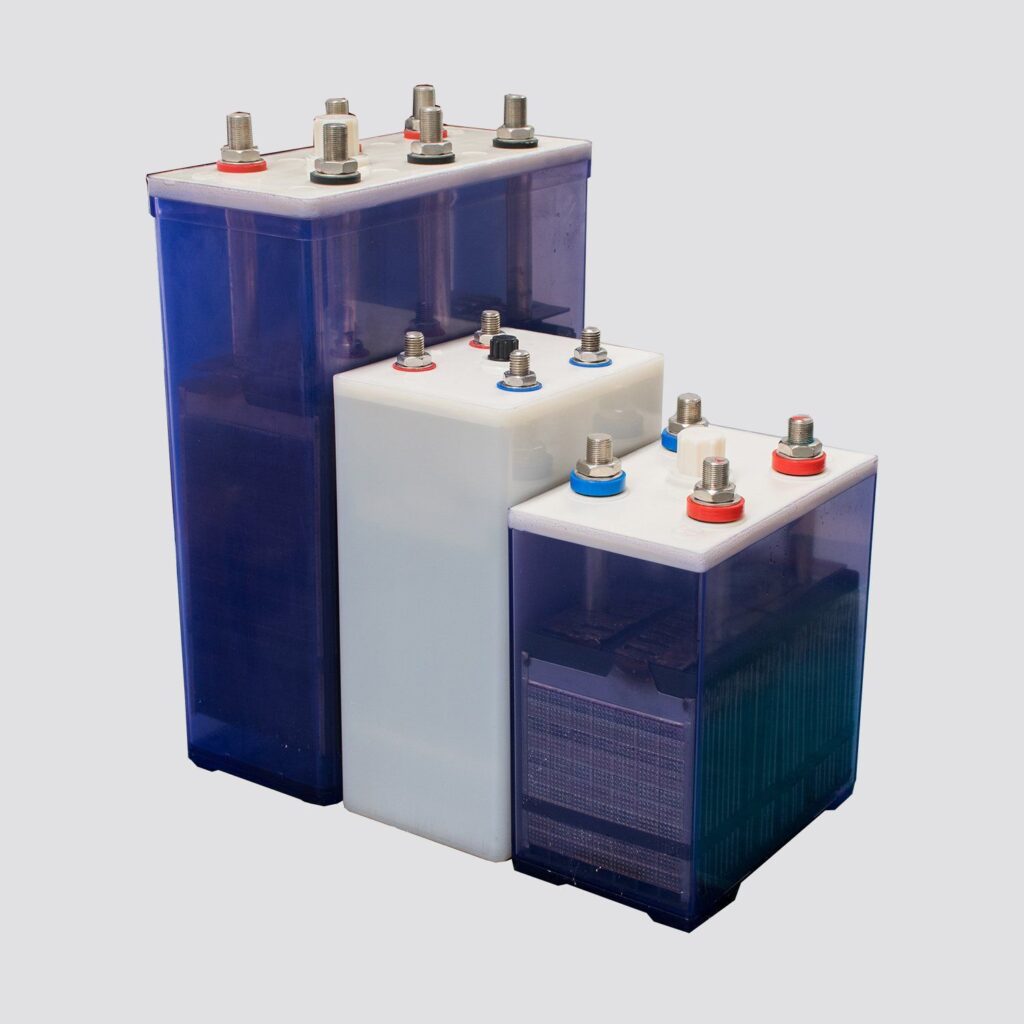
Industrial backup power systems are designed for one purpose: reliability during critical power failures. In industries such as power generation, telecommunications, railway transportation, oil & gas, and renewable energy, battery failure can lead to equipment shutdown, data loss, safety risks, and enormous financial damage.
While lithium batteries are becoming increasingly popular in consumer and residential applications, nickel-cadmium (NiCd) batteries continue to dominate many industrial backup applications because of their exceptional reliability, long service life, and resistance to harsh environments.
However, choosing the wrong NiCd battery can cause serious operational issues, including insufficient backup time, premature battery aging, oversized investment costs, and maintenance problems.
This guide explains how to choose the right industrial NiCd battery for your backup power system and what factors engineers, EPC contractors, and industrial buyers should evaluate before purchasing.
Why Industrial Applications Still Use NiCd Batteries
Nickel-cadmium batteries have been used in industrial DC systems for decades. Unlike ordinary lead-acid batteries, industrial NiCd batteries are designed to operate reliably under extreme conditions.
They are widely used in:
- Power plants
- Electrical substations
- Railway signaling systems
- Telecom base stations
- Offshore oil & gas platforms
- Solar and hybrid energy storage systems
- Emergency lighting systems
- UPS backup systems
The main reason industries continue using NiCd technology is reliability.
Key advantages include:
| Feature | Industrial NiCd Battery |
|---|---|
| Service life | 15–25 years |
| High temperature resistance | Excellent |
| Deep discharge capability | Excellent |
| Low temperature performance | Excellent |
| Overcharge tolerance | Very high |
| Maintenance requirements | Low |
| Reliability in harsh environments | Outstanding |
Step 1: Determine Your Backup Power Requirements
Before selecting a battery, you must first define the operational requirements of your system.
Important questions include:
- What equipment will the battery support?
- How long should backup power last?
- What is the DC system voltage?
- What is the required discharge current?
- Is the load constant or variable?
- What is the ambient temperature?
Typical industrial DC voltages include:
| Application | Common System Voltage |
|---|---|
| Telecom | 48V |
| Substation control | 110V / 220V |
| UPS systems | 24V / 48V / 240V |
| Railway signaling | 110V |
| Solar storage | 48V / higher |
Backup time may range from:
- 15 minutes for UPS systems
- 1–8 hours for telecom systems
- Several hours for substations and emergency systems
The required backup duration directly affects battery capacity selection.
Step 2: Choose the Correct NiCd Battery Type
Industrial NiCd batteries are mainly divided into two categories:
Pocket Plate NiCd Batteries
Pocket plate batteries are the most common type for industrial backup systems.
Advantages:
- Long service life
- Excellent mechanical strength
- High reliability
- Low maintenance
- Suitable for float charging
Applications:
- Power plants
- Substations
- Telecom systems
- UPS systems
- Renewable energy storage
Sintered Plate NiCd Batteries
Sintered plate batteries are designed for high-rate discharge applications.
Advantages:
- Extremely high discharge performance
- Compact design
- Excellent low-temperature capability
Applications:
- Aviation
- Military systems
- Aircraft starting
- Specialized industrial equipment
For most industrial backup applications, pocket plate NiCd batteries are the preferred solution because of their balance between cost, lifespan, and reliability.
Step 3: Calculate the Required Battery Capacity
Battery capacity is one of the most important selection factors.
The capacity calculation depends on:
- Load current
- Backup duration
- End voltage
- Temperature
- Aging factor
- Discharge rate
Basic sizing principle:
C=I×tKC = \frac{I \times t}{K}C=KI×t
Where:
- C = Required battery capacity
- I = Load current
- t = Backup time
- K = Discharge efficiency factor
In industrial systems, engineers usually add:
- Aging margin
- Temperature correction
- Future expansion allowance
Improper sizing is one of the most common mistakes in industrial battery projects.
Oversized batteries increase project cost unnecessarily.
Undersized batteries may fail during emergency operation.
Step 4: Consider Environmental Conditions
One major advantage of NiCd batteries is their ability to operate in extreme environments.
This is especially important in:
- Desert solar plants
- Offshore platforms
- Cold-climate substations
- Tropical telecom stations
High Temperature Performance
Lead-acid batteries degrade rapidly in high temperatures.
In contrast, industrial NiCd batteries can continue operating reliably in temperatures above 40°C.
This makes them ideal for:
- Middle East projects
- Africa telecom systems
- Outdoor industrial installations
Low Temperature Performance
NiCd batteries also perform extremely well in cold climates.
Unlike many other battery chemistries, they maintain discharge capability even below -20°C.
Applications include:
- Railway systems
- Arctic installations
- Outdoor substations
Step 5: Evaluate Battery Lifetime and Total Cost
Many buyers focus only on initial battery price.
However, industrial projects should evaluate total cost of ownership (TCO).
Important cost factors include:
| Cost Factor | Importance |
|---|---|
| Initial purchase cost | Medium |
| Service life | Very high |
| Maintenance cost | High |
| Replacement frequency | High |
| Downtime risk | Critical |
Although NiCd batteries often cost more initially than lead-acid batteries, their long operational life can significantly reduce long-term system cost.
In many industrial projects, NiCd systems operate for more than 20 years.
Step 6: Check Charging Compatibility
Industrial NiCd batteries require compatible chargers.
The charger should support:
- Correct float voltage
- Equalization charging
- Temperature compensation
- Proper current limitation
Improper charging can shorten battery life significantly.
When replacing existing lead-acid systems with NiCd batteries, engineers should verify charger compatibility carefully.
Step 7: Evaluate Maintenance Requirements
Modern industrial NiCd batteries are designed for low maintenance operation.
However, maintenance requirements still vary depending on battery design.
Buyers should evaluate:
- Water refill frequency
- Electrolyte inspection
- Ventilation requirements
- Terminal maintenance
- Monitoring systems
Low-maintenance designs are particularly important for remote sites such as:
- Telecom towers
- Solar stations
- Offshore platforms
Step 8: Choose a Reliable Industrial Battery Supplier
The battery supplier is just as important as the battery itself.
Industrial projects require suppliers with:
- Manufacturing experience
- Stable quality control
- Technical support capability
- International certifications
- Export experience
- Long-term supply stability
Before purchasing, buyers should ask suppliers about:
- Production capacity
- Factory testing procedures
- Reference projects
- Warranty policy
- Delivery lead time
Common Mistakes When Choosing Industrial NiCd Batteries
Choosing Based Only on Price
Low-cost batteries may create long-term reliability risks.
Ignoring Temperature Conditions
Environmental conditions strongly affect battery performance and lifespan.
Incorrect Capacity Calculation
Improper sizing may cause system failure during emergencies.
Selecting the Wrong Battery Type
Not all NiCd batteries are designed for the same applications.
Ignoring Future Expansion
Industrial systems often expand over time.
Battery systems should allow future capacity increases where possible.
Recommended Applications for Industrial NiCd Batteries
| Industry | Recommended |
|---|---|
| Power plants | Excellent |
| Electrical substations | Excellent |
| Railway systems | Excellent |
| Telecom systems | Excellent |
| Offshore oil & gas | Excellent |
| Renewable energy storage | Very good |
| Data centers | Good |
| Residential energy storage | Limited |
Future Trends of Industrial NiCd Batteries
Despite the rapid growth of lithium batteries, industrial NiCd technology remains highly relevant in critical infrastructure applications.
Industries continue choosing NiCd batteries because of:
- Proven reliability
- Long operational life
- High safety
- Extreme temperature capability
- Strong tolerance to abuse conditions
Future demand is expected to remain strong in:
- Railway infrastructure
- Utility substations
- Oil & gas projects
- Harsh-environment backup systems
- Remote industrial installations
FAQ
Are NiCd batteries better than lead-acid batteries?
For industrial backup systems operating in harsh conditions, NiCd batteries often provide better reliability, longer lifespan, and superior temperature performance.
How long do industrial NiCd batteries last?
Industrial pocket plate NiCd batteries typically last 15–25 years depending on operating conditions and maintenance.
Can NiCd batteries work in high temperatures?
Yes. NiCd batteries are widely used in high-temperature industrial environments where lead-acid batteries may degrade rapidly.
Are NiCd batteries suitable for solar energy storage?
Yes, especially in remote or harsh environments where reliability is more important than compact size.
What is the biggest advantage of NiCd batteries?
Their exceptional reliability and long operational life under extreme industrial conditions.
Conclusion
Choosing the right industrial nickel-cadmium battery requires much more than comparing prices.
Engineers and buyers must carefully evaluate:
- Load requirements
- Environmental conditions
- Battery type
- Capacity sizing
- Charger compatibility
- Maintenance requirements
- Supplier reliability
For critical infrastructure applications, industrial NiCd batteries remain one of the most dependable energy storage solutions available today.
A properly selected NiCd battery system can provide decades of reliable backup power while reducing operational risks and long-term ownership costs.