
Introduction
In renewable energy systems, especially off-grid and hybrid solar installations, lead-acid batteries remain a popular choice thanks to their stability, low cost, and proven reliability. One of the most important design considerations is whether to connect the batteries in series or in parallel. Each configuration affects system voltage, capacity, performance, and long-term cycle life.
Keywords: lead-acid battery series connection, lead-acid battery parallel connection, energy storage battery wiring, off-grid solar battery bank.
How Series Connection Works
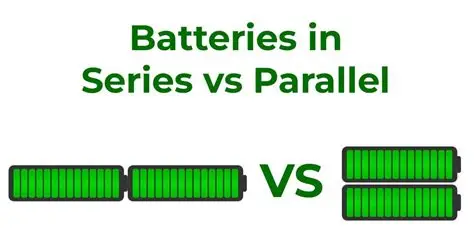
When lead-acid batteries are connected in series, the voltage increases while the capacity (Ah rating) remains the same.
Example:
6 × 2V OPzS batteries → 12V system.
Benefits
- Higher system voltage reduces current flow and improves efficiency.
- Suitable for large solar systems and inverter compatibility.
- Reduces cable size and electrical losses.
Drawbacks
- A weak cell affects the entire string.
- Requires strict voltage balance.
- Uneven aging can cause early failure.
How Parallel Connection Works
When batteries are connected in parallel, the voltage stays the same but the total capacity increases.
Example:
2 × 12V 200Ah → 12V 400Ah.
Benefits
- Increases storage capacity for long backup times.
- Individual batteries can be isolated for maintenance.
- Suitable for small to medium off-grid systems.
Drawbacks
- Unequal current sharing leads to overcharging or undercharging.
- Requires heavy copper busbars to limit resistance differences.
- Higher risk of circulating currents.
Conclusion
Choosing between series and parallel connection depends on the system voltage, load requirements, and the number of batteries. Proper design, equal cable lengths, matching batteries, and correct charging settings are crucial for long-term reliability.