
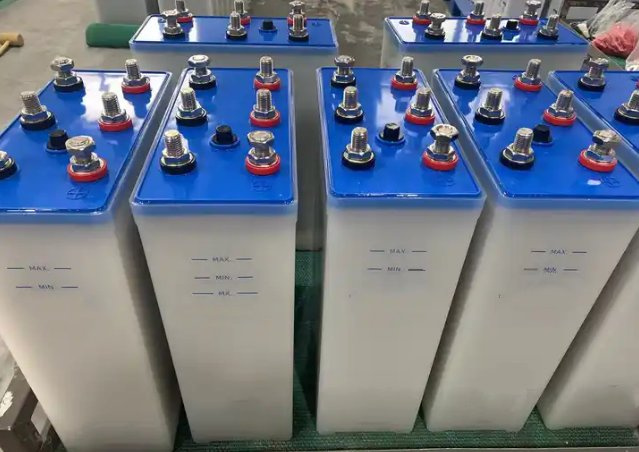
Correct battery sizing is one of the most important steps in designing a reliable industrial backup power system.
An undersized battery bank may fail during emergencies, while an oversized system increases unnecessary project cost.
In industrial applications such as:
- Power plants
- Electrical substations
- Railway systems
- Telecom networks
- UPS systems
- Solar energy storage
nickel-cadmium (NiCd) batteries are widely used because of their reliability, long lifespan, and excellent environmental tolerance.
However, proper battery sizing requires more than simply selecting the largest available capacity.
This guide explains how to size a NiCd battery bank correctly for industrial backup applications.
Why Proper Battery Sizing Matters
Battery sizing directly affects:
- Backup reliability
- System safety
- Operational lifespan
- Project cost
- Charging performance
Improper sizing may lead to:
- Insufficient backup time
- Excessive battery aging
- Voltage instability
- Premature battery failure
In critical infrastructure, accurate sizing is essential.
Understanding Battery Capacity
Battery capacity is typically measured in ampere-hours (Ah).
Basic sizing principle:
C=I×t/K
Where:
- C = Required capacity
- I = Load current
- t = Backup duration
- K = Efficiency correction factor
However, industrial battery sizing is much more complex in real-world projects.
Step 1: Identify System Voltage
The first step is determining the DC system voltage.
Common industrial DC voltages include:
| Application | Typical Voltage |
|---|---|
| Telecom systems | 48V |
| UPS systems | 24V / 48V / 220V |
| Railway systems | 110V |
| Substations | 110V / 220V |
The total number of battery cells depends on system voltage.
Step 2: Determine Load Requirements
Calculate the total connected load.
Important factors include:
- Continuous load
- Peak load
- Emergency load
- Future expansion
Typical equipment may include:
- Protection relays
- Emergency lighting
- Communication systems
- SCADA systems
- Inverters
- Control panels
Accurate load analysis is critical for proper battery sizing.
Step 3: Define Backup Time
Different industries require different backup durations.
| Application | Typical Backup Time |
|---|---|
| UPS systems | 15–30 minutes |
| Telecom systems | 1–8 hours |
| Substations | 5–10 hours |
| Railway systems | 3–8 hours |
Longer backup duration requires larger battery capacity.
Step 4: Consider Discharge Rate
Battery performance changes depending on discharge speed.
High-rate discharge reduces available capacity.
NiCd battery manufacturers provide discharge curves to help engineers determine:
- Actual usable capacity
- End voltage
- Current capability
Discharge rate is especially important for:
- UPS systems
- Emergency starting systems
- Short-duration high-current applications
Step 5: Apply Temperature Correction
Temperature significantly affects battery performance.
Although NiCd batteries perform better than lead-acid batteries in harsh climates, capacity still varies with temperature.
Low temperatures reduce available capacity.
Engineers often apply correction factors for:
- Cold climate installations
- Outdoor systems
- Remote telecom sites
Step 6: Include Aging Margin
Battery capacity gradually decreases over time.
Industrial designs typically include aging allowance to ensure reliable operation throughout the battery lifespan.
Common engineering practice includes:
- 10–25% aging margin
- Future expansion margin
- Safety reserve capacity
Step 7: Verify Charger Compatibility
Battery charger capability must match battery bank size.
Important charger considerations include:
- Float voltage
- Recharge current
- Recharge time
- Equalization charging
Improper charging may shorten battery lifespan.
Common Battery Sizing Mistakes
Ignoring Temperature Effects
Environmental conditions strongly affect performance.
Forgetting Aging Margin
Capacity decreases over time.
Incorrect Load Calculation
Missing emergency loads may cause system failure.
Oversizing the Battery Excessively
Oversized systems increase cost unnecessarily.
Conclusion
Proper NiCd battery sizing is essential for reliable industrial backup systems.
Accurate sizing requires evaluating:
- Load requirements
- Backup duration
- Temperature
- Discharge rate
- Aging margin
- Charger compatibility
A properly sized NiCd battery bank can provide decades of dependable backup power for critical industrial infrastructure.