
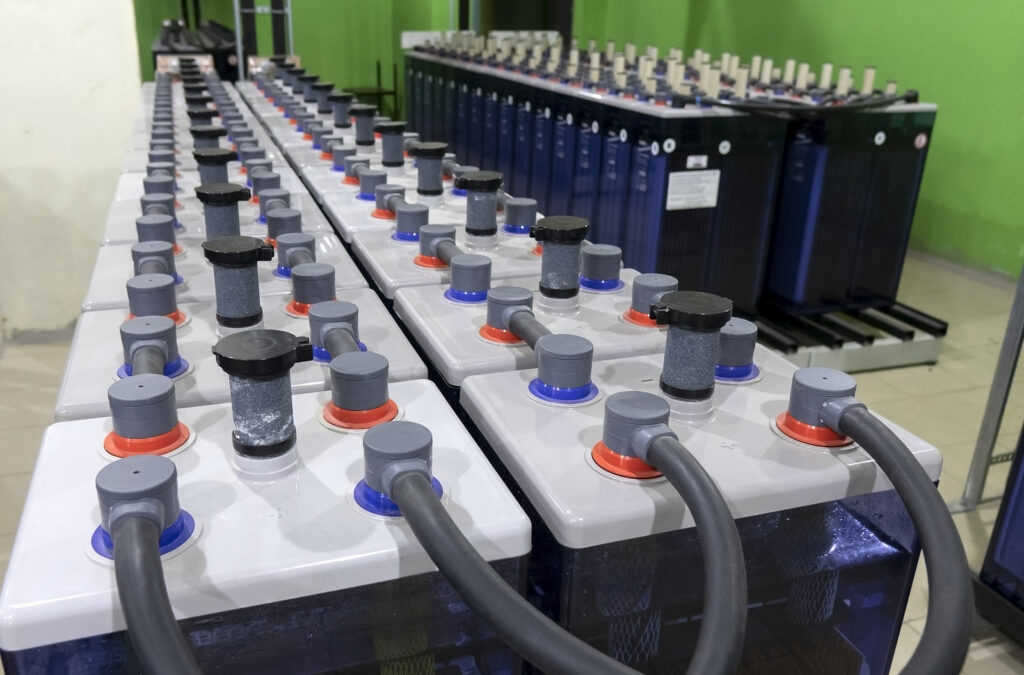
When selecting batteries for critical industrial applications, engineers often compare two proven technologies:
- Nickel-Cadmium (NiCd) Batteries
- OPzS Tubular Flooded Lead-Acid Batteries
Both technologies have been used successfully for decades in:
- Power plants
- Utility substations
- Telecom systems
- Railway infrastructure
- Renewable energy projects
However, they differ significantly in lifespan, maintenance requirements, temperature performance, and total ownership cost.
This guide provides a detailed comparison to help buyers choose the most suitable battery technology.
What Is an OPzS Battery?
OPzS stands for:
Ortsfeste PanZerplatte Säure
It is a flooded tubular plate lead-acid battery designed for long service life and deep-cycle applications.
Typical applications include:
- Solar energy storage
- Telecom systems
- Utility backup systems
- Industrial DC power systems
Key features:
- Tubular positive plates
- Liquid electrolyte
- Long design life
- High cycle capability
What Is an Industrial NiCd Battery?
Industrial NiCd batteries use:
- Nickel hydroxide positive electrodes
- Cadmium negative electrodes
- Potassium hydroxide electrolyte
They are designed for:
- Long-term reliability
- Extreme environments
- Critical infrastructure
Common applications include:
- Power plants
- Railway signaling
- Offshore oil & gas
- Substations
- Emergency systems
Lifespan Comparison
One of the most important differences is service life.
| Battery Type | Typical Service Life |
|---|---|
| NiCd Battery | 15–25 Years |
| OPzS Battery | 12–20 Years |
In harsh environments, NiCd batteries often maintain performance longer than OPzS systems.
High Temperature Performance
Temperature is a major factor in industrial battery selection.
NiCd Battery
Advantages:
- Excellent heat resistance
- Lower degradation at high temperatures
- Better performance above 35°C
Applications:
- Middle East projects
- African telecom systems
- Outdoor substations
OPzS Battery
Challenges:
- Faster aging in hot environments
- Electrolyte evaporation
- Increased maintenance requirements
Temperature control becomes more important.
Low Temperature Performance
Cold weather performance is another key difference.
NiCd Battery
Advantages:
- Strong discharge capability below -20°C
- Reliable emergency operation
- Stable voltage output
OPzS Battery
Challenges:
- Reduced capacity
- Slower electrochemical reactions
- Increased performance loss
Deep Discharge Capability
NiCd Battery
NiCd batteries tolerate:
- Frequent deep discharge
- Over-discharge conditions
- Repeated cycling
with minimal long-term damage.
OPzS Battery
OPzS batteries support deep cycling but are more sensitive to severe over-discharge.
Repeated abuse may shorten service life.
Maintenance Requirements
Maintenance is often a decisive factor.
| Maintenance Factor | NiCd | OPzS |
|---|---|---|
| Water refill | Required | Required |
| Equalization charge | Required | Required |
| Temperature sensitivity | Low | Higher |
| Maintenance frequency | Lower | Higher |
Reliability Comparison
Critical infrastructure operators prioritize reliability.
NiCd Battery Advantages
- High abuse tolerance
- Strong emergency performance
- Excellent environmental resistance
- Long proven track record
OPzS Advantages
- Mature technology
- Good cycle life
- Lower initial cost
Initial Cost vs Lifecycle Cost
Many buyers focus on purchase price.
However, lifecycle cost often provides a better comparison.
| Cost Factor | NiCd | OPzS |
|---|---|---|
| Initial Cost | Higher | Lower |
| Lifespan | Longer | Shorter |
| Maintenance Cost | Lower | Higher |
| Replacement Frequency | Lower | Higher |
Over 20 years, NiCd batteries often become more economical in critical applications.
Best Applications for NiCd Batteries
NiCd batteries are ideal for:
- Utility substations
- Power generation facilities
- Railway infrastructure
- Offshore platforms
- Extreme temperature environments
Best Applications for OPzS Batteries
OPzS batteries are ideal for:
- Solar energy storage
- Telecom systems
- Industrial backup power
- Budget-sensitive projects
FAQ
Which lasts longer, NiCd or OPzS batteries?
NiCd batteries generally provide longer service life.
Which performs better in high temperatures?
NiCd batteries are superior in hot environments.
Are OPzS batteries cheaper?
Yes, initial investment is typically lower.
Which battery is better for substations?
NiCd batteries are often preferred for critical utility applications.
Which battery requires more maintenance?
OPzS batteries generally require more maintenance.
Conclusion
Both NiCd and OPzS batteries are proven industrial technologies.
However, for applications requiring:
- Maximum reliability
- Long lifespan
- Harsh environment performance
NiCd batteries remain the preferred choice.
OPzS batteries provide a cost-effective alternative for less demanding applications.