
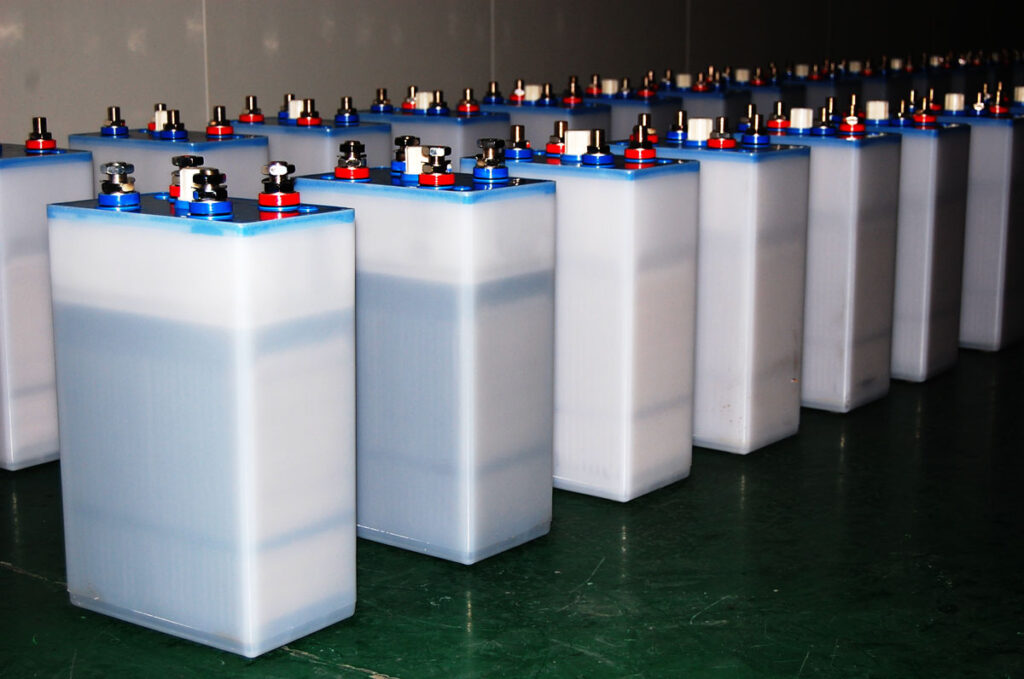
Pocket plate nickel-cadmium batteries have been the preferred energy storage solution for utilities and railway infrastructure for more than half a century.
Although lithium batteries have gained popularity in commercial energy storage, pocket plate NiCd batteries continue to dominate many critical infrastructure projects because of their:
- Exceptional reliability
- Long service life
- Excellent temperature performance
- Proven field experience
This guide explains how to choose the right pocket plate NiCd battery for utility and railway applications.
What Is a Pocket Plate NiCd Battery?
Pocket plate technology uses perforated steel pockets to contain the active material.
This design provides:
- High mechanical strength
- Excellent cycle life
- Long operational lifespan
- Stable electrical performance
Compared with sintered plate batteries, pocket plate designs are optimized for long-term stationary applications.
Why Utilities Prefer Pocket Plate Batteries
Power utilities require batteries that can remain on standby for years while still delivering instant power during emergencies.
Pocket plate batteries offer:
- Long float life
- Low degradation
- Excellent abuse tolerance
- High operational reliability
These characteristics make them ideal for substations and power plants.
Why Railway Operators Choose Pocket Plate Batteries
Railway signaling systems demand continuous availability.
Pocket plate batteries provide:
- Reliable emergency power
- Strong vibration resistance
- Stable voltage under load
- Excellent cold-weather performance
This ensures uninterrupted operation of signaling and control equipment.
Key Selection Criteria
When selecting a pocket plate battery, consider:
System Voltage
Common DC voltages include:
- 24V
- 48V
- 110V
- 220V
Backup Time
Typical requirements:
- 30 minutes
- 1 hour
- 5 hours
- 8 hours
Battery capacity must match the required autonomy.
Operating Environment
Evaluate:
- Ambient temperature
- Humidity
- Dust
- Vibration
- Installation location
Maintenance Requirements
Although pocket plate batteries require relatively low maintenance, buyers should consider:
- Electrolyte management
- Inspection intervals
- Accessibility
Questions to Ask Suppliers
Before purchasing, ask:
- Is the battery designed according to IEC 60623?
- What is the expected service life?
- Can discharge curves be provided?
- What warranty is offered?
- Can the battery operate in my environmental conditions?
Why Lifecycle Cost Matters
A battery with a higher purchase price may provide:
- Longer lifespan
- Lower maintenance
- Fewer replacements
- Higher reliability
As a result, total ownership cost may actually be lower.
Common Procurement Mistakes
Avoid:
- Selecting based only on price
- Ignoring environmental conditions
- Underestimating backup time
- Choosing suppliers without industrial experience
FAQ
Why are pocket plate batteries widely used in utilities?
Because they provide exceptional reliability and long service life.
How long do pocket plate batteries last?
Typically 15–25 years under proper operating conditions.
Are pocket plate batteries suitable for railway projects?
Yes. They are widely used in signaling, communication, and control systems.
What standards should buyers look for?
IEC 60623 is one of the most widely recognized standards for industrial NiCd batteries.
Are pocket plate batteries better than sintered plate batteries?
For stationary industrial backup applications, pocket plate batteries are generally the preferred choice.
Conclusion
Pocket plate NiCd batteries remain one of the most dependable solutions for utility and railway backup power systems.
By carefully evaluating technical requirements, environmental conditions, and supplier capabilities, buyers can select a battery system that delivers reliable performance for decades.