
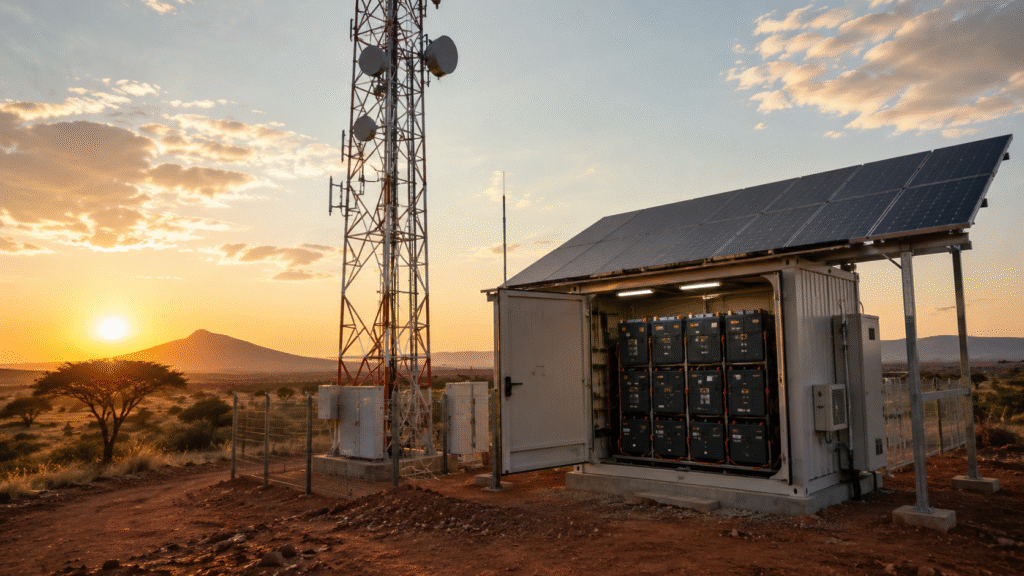
Africa has experienced one of the fastest-growing telecommunications markets in the world over the past decade.
Thousands of new GSM, LTE, and 5G base stations have been deployed across countries such as:
- Nigeria
- Kenya
- Tanzania
- Uganda
- Ghana
- Ethiopia
- Zambia
- Zimbabwe
- South Africa
However, one major challenge remains:
Power reliability.
Many telecom towers experience:
- Frequent grid outages
- Diesel generator failures
- High ambient temperatures
- Limited maintenance access
- Remote installation locations
Selecting the right battery technology is therefore one of the most important decisions for telecom operators.
Why Backup Batteries Are Critical for African Telecom Towers
A telecom tower must continue operating even when the electrical grid fails.
Battery systems support:
- BTS equipment
- Transmission systems
- Microwave radios
- Routers
- Monitoring systems
- Security equipment
Even a short interruption may cause:
- Network downtime
- Revenue loss
- Customer complaints
- Emergency communication failures
Challenges in African Telecom Installations
Unlike urban data centers, telecom towers often operate in remote environments.
Common challenges include:
High Temperature
Many African countries experience daily temperatures above:
40°C
Battery cabinets exposed to direct sunlight may exceed:
55°C
Poor Grid Quality
Power interruptions may occur several times per day.
Battery systems must tolerate:
- Frequent charging
- Frequent discharging
- Generator switching
Remote Locations
Some towers are located:
- Hundreds of kilometers from cities
- Mountain regions
- Desert areas
- Forest areas
Maintenance visits are expensive.
Low-maintenance batteries become essential.
Which Battery Technology Is Best?
Let’s compare the most common battery technologies.
| Battery Type | Service Life | Heat Resistance | Maintenance | Best For |
|---|---|---|---|---|
| AGM | 3–5 Years | Moderate | Low | Budget projects |
| GEL | 5–8 Years | Good | Low | Medium projects |
| OPzV | 10–15 Years | Very Good | Very Low | Premium telecom |
| OPzS | 12–18 Years | Good | Medium | Large telecom sites |
| NiCd | 15–25 Years | Excellent | Low | Harsh environments |
| LiFePO4 | 10–15 Years | Good | Very Low | Hybrid energy systems |
Why More African Operators Are Choosing NiCd Batteries
Industrial NiCd batteries offer several advantages:
High Temperature Performance
Unlike conventional lead-acid batteries, NiCd batteries maintain stable performance under extreme heat.
Long Service Life
Many telecom operators expect battery systems to operate for:
15–20 years.
NiCd batteries are well suited to these long-term projects.
Excellent Deep Discharge Recovery
Frequent outages are common.
NiCd batteries recover effectively after repeated deep discharges.
Low Lifecycle Cost
Although initial investment is higher, lower replacement frequency often results in lower total ownership cost.
Typical Telecom Configurations
Common DC systems include:
48V DC
using:
40 × 1.2V NiCd cells
Battery capacity depends on:
- Load
- Backup time
- Future expansion
Solar Hybrid Telecom Sites
Many African telecom operators now combine:
Solar Panels
Diesel Generator
Battery Storage
Industrial NiCd batteries integrate well with these hybrid systems because of their:
- Temperature tolerance
- Long service life
- Charging flexibility
Choosing the Right Supplier
When sourcing telecom batteries, consider:
✓ IEC standards
✓ Export experience
✓ Telecom references
✓ Engineering support
✓ Long warranty
✓ Stable production
FAQ
Which battery lasts longest for telecom towers?
Industrial NiCd batteries typically provide the longest operational life.
Which battery performs best in hot climates?
NiCd batteries are among the best choices for extreme temperatures.
Is lithium better for telecom towers?
Lithium performs well but may require more sophisticated battery management systems. For harsh, remote sites, NiCd remains a proven option.
What is the typical telecom DC voltage?
Most telecom towers operate on 48V DC battery systems.
Conclusion
Reliable backup power is essential for maintaining telecom services across Africa.
For operators facing:
- High temperatures
- Frequent outages
- Remote installations
industrial NiCd batteries provide an excellent combination of:
- Long service life
- Low maintenance
- Outstanding reliability
making them one of the best solutions for critical telecom infrastructure.