
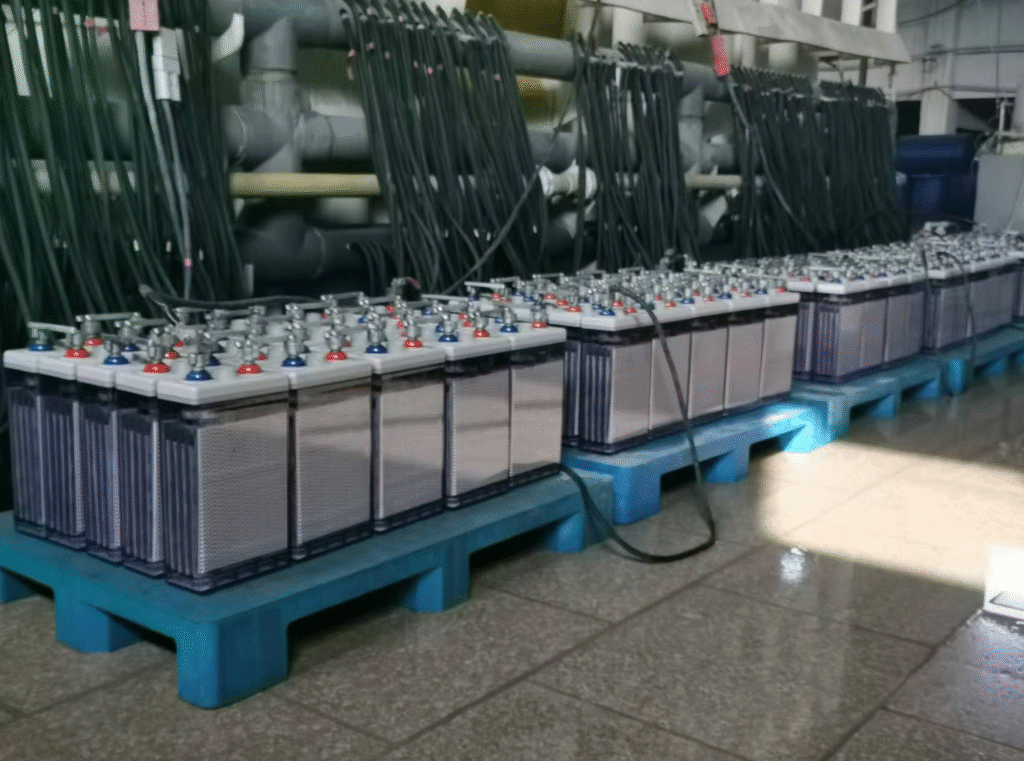
Keywords: OPzV battery life, OPzS battery cycle life, tubular battery cost, energy storage battery lifespan
Battery lifetime and long-term project economics are the most important concerns for energy storage investors. OPzV and OPzS batteries are both designed for long service life, but their real performance and cost structure differ significantly.
This article provides a detailed comparison of life expectancy, cycle performance, and total cost of ownership.
1. Design Life and Float Service Life
- OPzS batteries: 15–20 years design life
- OPzV batteries: 18–25 years design life
OPzV batteries generally provide longer stable float operation.
2. Cycle Life and Depth of Discharge
OPzV batteries show better performance under:
- Deep cycling
- Partial state of charge
- Frequent charge–discharge operation
This makes them more suitable for renewable energy storage systems.
3. Maintenance Cost and Operating Expenses
OPzS batteries require:
- Regular water addition
- Maintenance labor
- Ventilation systems
OPzV batteries reduce operating expenses significantly.
4. Total Cost of Ownership (TCO) Comparison
Over a 20-year project lifetime, OPzV batteries often deliver 10–25% lower total ownership cost compared with OPzS batteries.
Conclusion
From a long-term economic perspective, OPzV batteries usually provide better investment returns for energy storage projects.