
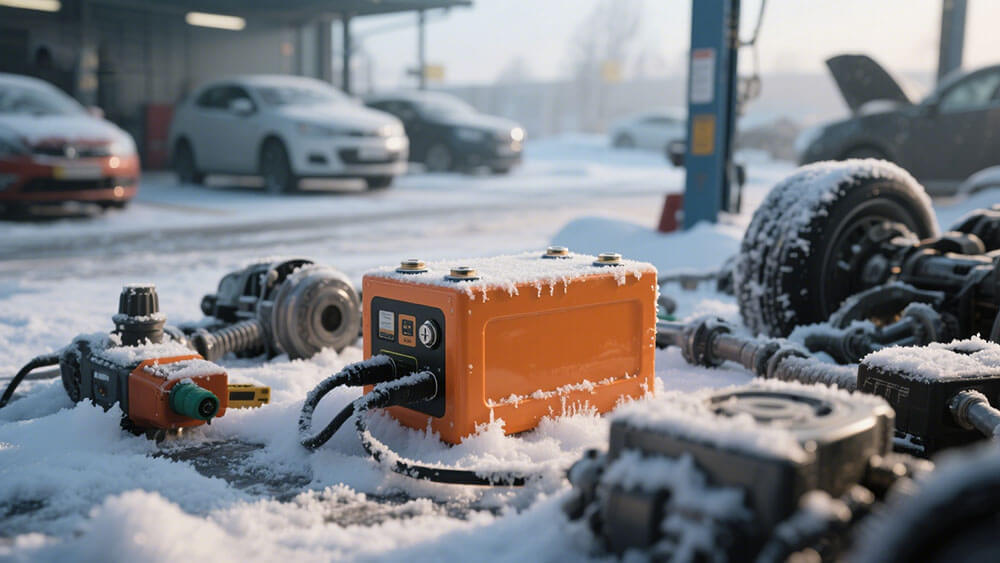
Cold weather is one of the biggest challenges for battery systems.
As temperatures fall, many battery technologies experience:
- Capacity reduction
- Slower charging
- Voltage instability
- Reduced backup time
These problems can create serious reliability concerns in industries where uninterrupted power is critical.
Nickel-cadmium (NiCd) batteries are widely recognized for their superior low-temperature performance.
This is one reason they remain popular in:
- Railway systems
- Electrical substations
- Telecom networks
- Remote monitoring stations
- Arctic and alpine installations
This article explains why NiCd batteries perform so well in cold weather and how they compare with other battery technologies.
Why Cold Temperatures Affect Batteries
Battery operation depends on electrochemical reactions.
As temperature decreases:
- Chemical reactions slow down
- Internal resistance increases
- Available capacity decreases
Most battery technologies experience reduced performance in cold conditions.
The extent of this reduction varies significantly.
How NiCd Batteries Handle Low Temperatures
NiCd batteries possess several characteristics that make them highly suitable for cold environments.
Low Internal Resistance
NiCd batteries maintain relatively low internal resistance even at low temperatures.
Benefits include:
- Stable voltage output
- Better current delivery
- Improved emergency performance
This is especially important for critical backup systems.
Efficient Electrochemical Reactions
The chemistry of NiCd batteries remains effective at temperatures where other battery types struggle.
As a result, NiCd batteries continue delivering usable capacity in cold weather.
Strong High-Current Capability
Many emergency systems require rapid power delivery.
Examples include:
- Circuit breakers
- Railway signaling
- Emergency communications
NiCd batteries can provide high discharge currents even in freezing conditions.
Capacity Retention at Low Temperatures
The following table illustrates typical performance trends.
| Temperature | NiCd Capacity Retention |
|---|---|
| 25°C | 100% |
| 0°C | 90–95% |
| -20°C | 80–90% |
| -40°C | 60–80% |
Actual performance depends on battery design and operating conditions.
Comparison with Lead-Acid Batteries
Lead-acid batteries experience more significant performance loss in cold weather.
| Temperature | Lead Acid Capacity Retention |
|---|---|
| 25°C | 100% |
| 0°C | 80–85% |
| -20°C | 50–60% |
| -40°C | Extremely Limited |
This difference explains why many cold-climate installations prefer NiCd technology.
Comparison with Lithium Batteries
Lithium batteries also face challenges at low temperatures.
Common issues include:
- Reduced charging capability
- Increased resistance
- Slower chemical activity
Some lithium systems require battery heaters to operate effectively.
NiCd batteries generally require less thermal management.
Typical Cold Climate Applications
NiCd batteries are commonly used in:
Railway Signaling Systems
Reliable operation during winter conditions.
Utility Substations
Emergency backup power for protection systems.
Telecom Base Stations
Remote communication sites in cold regions.
Oil & Gas Installations
Northern energy infrastructure.
Remote Monitoring Stations
Scientific and industrial monitoring systems.
Benefits of NiCd Batteries in Cold Environments
Reliable Emergency Operation
Critical systems remain functional during severe weather.
Reduced Heating Requirements
Less dependence on battery heating systems.
Lower Operational Risk
Reliable backup power improves system availability.
Long Service Life
Cold environments generally have less impact on NiCd lifespan than on many other battery technologies.
Designing Battery Systems for Cold Climates
Even though NiCd batteries perform well in cold weather, proper system design remains important.
Best practices include:
- Insulated battery enclosures
- Temperature monitoring
- Appropriate charger settings
- Periodic capacity testing
These measures help maximize performance.
Why Railways Prefer NiCd Batteries in Winter
Railway operators face unique challenges:
- Snow
- Ice
- Freezing temperatures
- Remote infrastructure
NiCd batteries provide the reliability necessary to maintain signaling and safety systems under these conditions.
Why Utilities Trust NiCd Batteries
Utility companies often operate infrastructure in:
- Mountains
- Arctic regions
- Remote outdoor locations
NiCd batteries help ensure critical equipment remains operational regardless of weather conditions.
Future Outlook
As renewable energy and remote infrastructure projects expand into colder regions, demand for reliable low-temperature battery technologies will continue.
NiCd batteries remain one of the most proven solutions available.
FAQ
Why do NiCd batteries perform well in cold weather?
Because they maintain low internal resistance and effective electrochemical activity at low temperatures.
Can NiCd batteries operate below -20°C?
Yes. Many industrial NiCd batteries continue operating effectively at very low temperatures.
Are NiCd batteries better than lead-acid batteries in cold climates?
Generally yes, especially for critical industrial applications.
Do NiCd batteries need heaters?
In many applications, NiCd batteries require less thermal management than other battery technologies.
Which industries benefit most from cold-weather NiCd performance?
Railways, utilities, telecom operators, oil & gas facilities, and remote infrastructure projects.
Conclusion
Cold weather presents significant challenges for battery systems, but NiCd batteries are uniquely suited to these conditions.
Their:
- Strong low-temperature performance
- Reliable emergency capability
- Long service life
- Proven operational history
make them one of the best choices for critical infrastructure in cold climates.
For organizations operating in harsh winter environments, industrial NiCd batteries continue to provide dependable and cost-effective backup power solutions.