
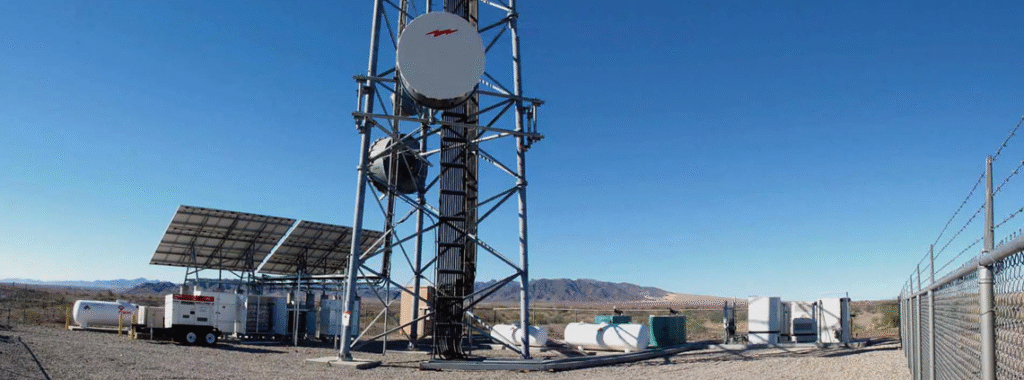
Telecommunication networks depend on uninterrupted power to maintain communication services.
A power outage at a telecom base station can affect:
- Mobile communications
- Internet connectivity
- Emergency services
- Business operations
Backup battery systems are therefore essential.
While lead-acid batteries remain common in telecom applications, nickel-cadmium batteries continue to be used in locations where reliability and environmental performance are critical.
Why Telecom Base Stations Need Backup Batteries
Telecom sites often operate in:
- Remote rural areas
- Mountain regions
- Desert locations
- Tropical climates
Power interruptions may occur due to:
- Grid instability
- Severe weather
- Natural disasters
- Equipment failures
Backup batteries ensure communication services remain available during outages.
Key Requirements for Telecom Batteries
Telecom operators typically require:
- Long service life
- Low maintenance
- Reliable operation
- Temperature resistance
- High availability
NiCd batteries satisfy many of these requirements.
Advantages of NiCd Batteries in Telecom Systems
Long Service Life
Industrial NiCd batteries commonly provide:
- 15–25 years of service life
This reduces replacement frequency and operational disruptions.
Excellent Temperature Tolerance
Many telecom sites lack sophisticated cooling systems.
NiCd batteries perform well in:
- Desert heat
- Tropical climates
- Cold regions
where other battery technologies may struggle.
High Reliability
Telecom operators prioritize network uptime.
NiCd batteries are known for:
- Consistent performance
- Low failure rates
- Strong emergency capability
Deep Discharge Resistance
Grid failures can sometimes last longer than expected.
NiCd batteries recover well from deep discharge events, helping improve system resilience.
Low Maintenance
Remote telecom installations benefit from technologies requiring minimal maintenance.
NiCd batteries are well suited to these conditions.
Challenges of NiCd Batteries in Telecom Applications
Higher Initial Cost
NiCd batteries generally cost more than conventional lead-acid batteries.
This can influence project budgets.
Lower Energy Density
Compared with lithium batteries, NiCd batteries require more installation space.
Environmental Regulations
Cadmium is regulated in many countries.
Proper recycling and disposal procedures must be followed.
Typical Telecom Applications
NiCd batteries support:
Mobile Base Stations
Provide backup during utility outages.
Microwave Communication Systems
Ensure network continuity.
Remote Communication Sites
Support isolated installations.
Emergency Communication Networks
Maintain critical communication services.
NiCd vs Lead Acid in Telecom Systems
| Feature | NiCd | Lead Acid |
|---|---|---|
| Service Life | Excellent | Good |
| High Temperature Performance | Excellent | Moderate |
| Deep Discharge Recovery | Excellent | Limited |
| Maintenance | Low | Higher |
| Initial Cost | Higher | Lower |
| Reliability | Excellent | Good |
Future Trends in Telecom Energy Storage
Telecom operators are increasingly adopting:
- Smart battery monitoring
- Renewable energy integration
- Hybrid power systems
NiCd batteries continue to be selected where reliability and environmental durability are priorities.
FAQ
Are NiCd batteries suitable for telecom base stations?
Yes. They offer excellent reliability and environmental tolerance.
Why do telecom operators use NiCd batteries?
Because of their long lifespan and dependable performance.
Can NiCd batteries operate in remote locations?
Yes. Their low maintenance requirements make them ideal for remote installations.
How long do telecom NiCd batteries last?
Typically 15–25 years.
Are lithium batteries replacing NiCd in telecom systems?
Lithium batteries are growing in popularity, but NiCd remains valuable in harsh environments.
Conclusion
Telecom networks require reliable backup power to ensure uninterrupted communication services.
NiCd batteries continue to provide:
- Long operational life
- Strong environmental performance
- Low maintenance requirements
- Reliable emergency backup
For challenging telecom installations, NiCd batteries remain a proven and dependable solution.