
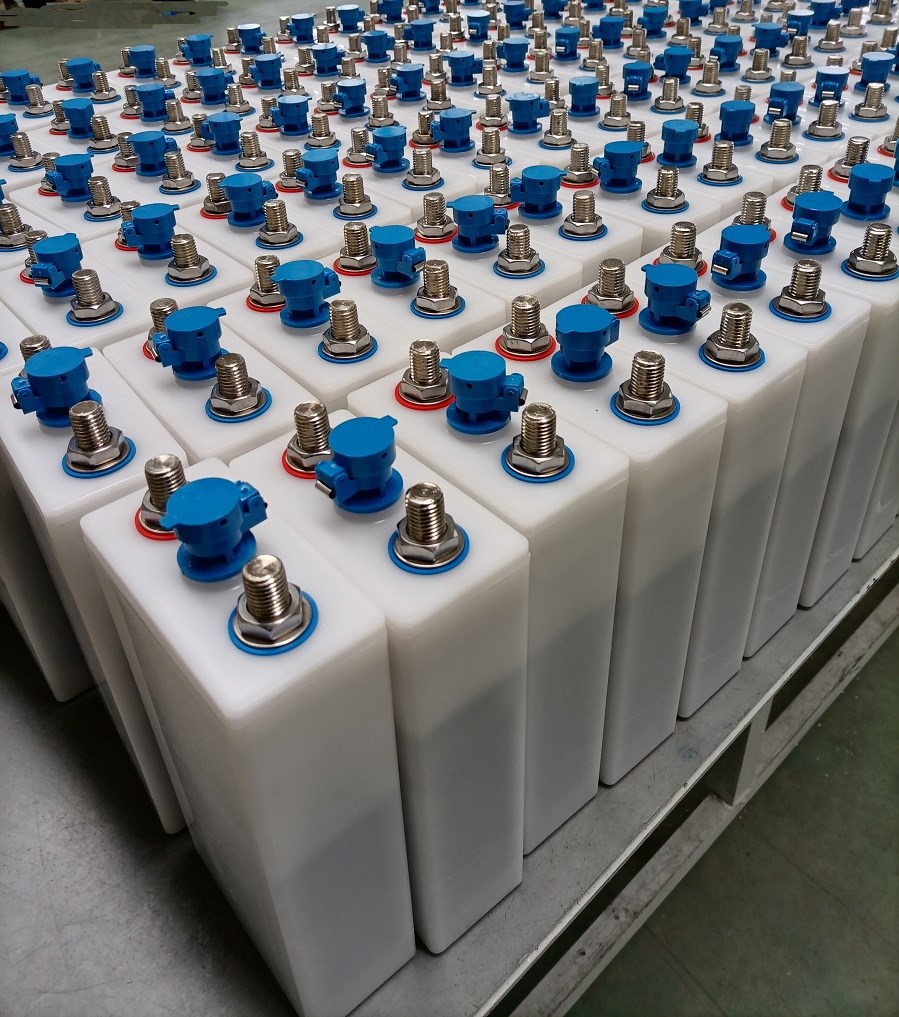
If you search for nickel-cadmium (NiCd) batteries online, one issue appears repeatedly:
Memory Effect.
Many people believe that NiCd batteries always suffer from memory effect and therefore should be avoided.
However, this belief is often based on outdated information or consumer battery experiences rather than modern industrial battery applications.
The reality is much more nuanced.
In fact, the “memory effect” observed in industrial NiCd batteries is far less significant than many people think, and in most industrial backup power systems, it is rarely a practical concern.
This article explains what memory effect really is, whether modern NiCd batteries still experience it, and how industrial users can manage or prevent it.
What Is Memory Effect?
Memory effect refers to a phenomenon where a rechargeable battery appears to “remember” a reduced operating capacity after repeatedly being discharged to the same level before recharging.
The result may be:
- Reduced apparent capacity
- Lower discharge voltage
- Shorter runtime
In simple terms:
If a battery is repeatedly discharged to only 30% of its capacity and then recharged, it may eventually behave as though its usable capacity is only 30%.
Where Did the Memory Effect Story Come From?
The original memory effect was first observed in aerospace applications.
Early studies involved:
- Satellites
- Spacecraft
- Aerospace electronics
These systems operated under extremely controlled conditions:
- Identical charge cycles
- Identical discharge depths
- Constant temperatures
- Thousands of repeated cycles
Under these very specific conditions, a measurable memory effect was observed.
However, industrial battery systems rarely operate under such conditions.
True Memory Effect vs Voltage Depression
One of the biggest misunderstandings in the battery industry is confusing:
True Memory Effect
with
Voltage Depression
These are not the same phenomenon.
True Memory Effect
Characteristics:
- Extremely rare
- Requires highly repetitive cycling
- Mostly observed in laboratory or aerospace conditions
Most industrial users will never experience true memory effect.
Voltage Depression
Voltage depression is much more common.
Characteristics include:
- Temporary voltage reduction
- Apparent capacity loss
- Recoverable through maintenance procedures
This is often incorrectly called memory effect.
Do Modern Industrial NiCd Batteries Still Have Memory Effect?
For most industrial applications:
The answer is largely NO.
Modern industrial pocket plate NiCd batteries used in:
- Substations
- Power plants
- Railway systems
- Telecom networks
- Offshore platforms
rarely experience true memory effect.
Reasons include:
- Variable operating conditions
- Different discharge depths
- Float charging operation
- Modern charging technologies
These conditions prevent the repetitive cycling patterns required for true memory effect.
Why Industrial NiCd Batteries Are Different
Many online discussions about memory effect focus on:
- Cordless tools
- Consumer electronics
- Older rechargeable devices
Industrial NiCd batteries operate very differently.
Most Industrial Batteries Remain on Float Charge
Examples include:
- UPS systems
- Telecom backup systems
- Utility substations
The batteries spend most of their life:
- Fully charged
- On standby
- Rarely cycled
Under these conditions, true memory effect is virtually nonexistent.
Modern Chargers Reduce Risk
Today’s charging systems provide:
- Intelligent charging algorithms
- Equalization charging
- Voltage control
- Temperature compensation
These features help prevent conditions associated with memory effect.
What Causes Apparent Capacity Loss?
If memory effect is rare, why do some NiCd batteries appear to lose capacity?
Several factors may be responsible.
Voltage Depression
The most common cause.
Repeated shallow cycling may temporarily reduce operating voltage.
Fortunately, this effect is often reversible.
Aging
All batteries age over time.
Capacity gradually declines due to:
- Electrode wear
- Electrolyte changes
- Long-term operation
This is normal and unrelated to memory effect.
Improper Charging
Incorrect charging settings may affect battery performance.
Examples include:
- Chronic undercharging
- Inadequate equalization charging
- Charger incompatibility
Lack of Maintenance
Industrial batteries require periodic inspection and testing.
Failure to perform maintenance may lead to:
- Cell imbalance
- Reduced capacity
- Apparent performance issues
How to Prevent Memory Effect and Voltage Depression
Although true memory effect is rare, proper maintenance remains important.
Perform Periodic Deep Discharge Tests
Capacity testing helps:
- Verify battery performance
- Restore cell balance
- Detect aging
Many utilities perform periodic discharge testing as part of preventive maintenance.
Use Proper Charging Equipment
Industrial NiCd batteries should always use chargers designed for NiCd chemistry.
Key features include:
- Float charging control
- Equalization charging
- Temperature compensation
Follow Manufacturer Recommendations
Maintenance schedules should follow supplier guidelines.
This helps maximize performance and service life.
Maintain Proper Operating Temperatures
Avoid excessive heat whenever possible.
Although NiCd batteries tolerate high temperatures better than many alternatives, cooler environments generally support longer lifespan.
Memory Effect vs Other Battery Technologies
Many buyers assume memory effect is unique to NiCd batteries.
In reality, every battery technology has limitations.
NiCd Batteries
Potential issue:
- Voltage depression (rarely true memory effect)
Advantages:
- Long lifespan
- Excellent reliability
- Strong temperature tolerance
Lead Acid Batteries
Common issues:
- Sulfation
- Capacity loss
- Sensitivity to deep discharge
Lithium Batteries
Common issues:
- Capacity fade
- Calendar aging
- Temperature sensitivity
Every battery technology requires proper management.
Why Utilities Still Use NiCd Batteries
If memory effect were a major issue, utilities would not continue using NiCd batteries.
Yet NiCd batteries remain common in:
- Nuclear power plants
- Railway systems
- Electrical substations
- Offshore platforms
The reason is simple:
Their overall reliability far outweighs any concerns about memory effect.
Common Myths About NiCd Batteries
Myth 1: All NiCd Batteries Have Severe Memory Effect
False.
True memory effect is extremely rare in industrial applications.
Myth 2: NiCd Batteries Must Be Fully Discharged Every Time
False.
Modern industrial NiCd batteries do not require complete discharge before recharging.
Myth 3: Memory Effect Permanently Damages Batteries
False.
Voltage depression can often be corrected through proper maintenance.
Myth 4: Memory Effect Makes NiCd Batteries Obsolete
False.
NiCd batteries remain widely used in critical infrastructure worldwide.
FAQ
Do industrial NiCd batteries still suffer from memory effect?
In most industrial applications, true memory effect is extremely rare.
What is voltage depression?
A temporary reduction in operating voltage often mistaken for memory effect.
Can memory effect be prevented?
Proper charging, maintenance, and periodic testing greatly reduce the risk.
Should NiCd batteries be fully discharged before charging?
No. This is generally unnecessary for modern industrial NiCd systems.
Why are NiCd batteries still used if memory effect exists?
Because their reliability, lifespan, and environmental tolerance remain excellent for critical infrastructure applications.
Conclusion
Memory effect is one of the most misunderstood aspects of nickel-cadmium battery technology.
While true memory effect does exist under very specific conditions, it is rarely encountered in modern industrial applications.
For most utility, telecom, railway, and backup power systems, concerns about memory effect are largely outweighed by the significant advantages NiCd batteries provide:
- Long service life
- Exceptional reliability
- Temperature resistance
- Deep discharge capability
- Proven performance in critical infrastructure
Understanding the difference between true memory effect and voltage depression allows engineers and buyers to make informed decisions when evaluating industrial NiCd battery solutions.