
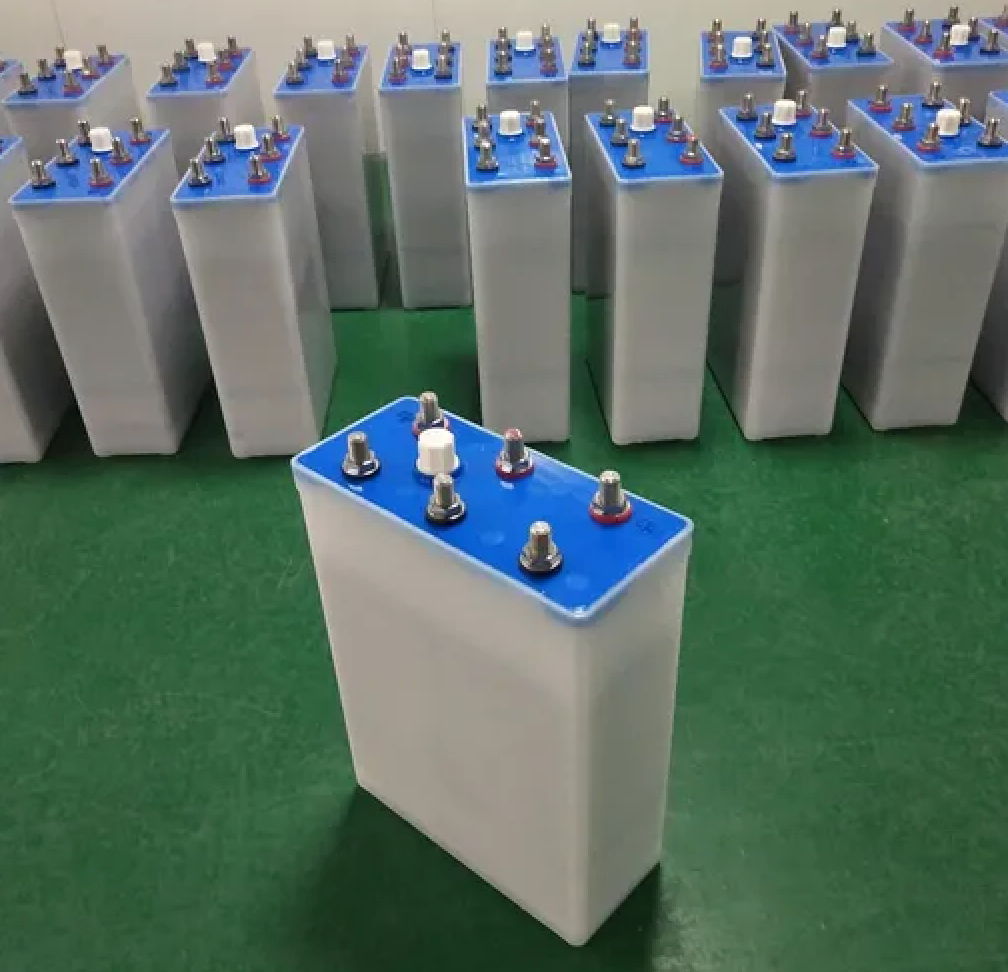
Industrial nickel-cadmium (NiCd) batteries are widely used in:
- Power plants
- Substations
- Railway systems
- Telecom infrastructure
- Offshore platforms
- UPS backup systems
They are known for long service life and high reliability.
However, many industrial buyers still make critical mistakes during procurement, leading to:
- Poor performance
- Shortened lifespan
- Oversized costs
- System failure risks
This article explains the most common mistakes when buying NiCd batteries and how to avoid them.
Mistake 1: Choosing Based Only on Price
One of the biggest mistakes is selecting batteries based only on the lowest price.
Low-cost batteries may result in:
- Shorter lifespan
- Poor quality control
- Inconsistent performance
- Higher replacement frequency
In industrial systems, the real cost is lifecycle cost, not purchase price.
Mistake 2: Ignoring Application Requirements
Different applications require different battery characteristics.
For example:
- Railway systems require vibration resistance
- Substations require long float life
- Offshore systems require corrosion resistance
- UPS systems require stable discharge performance
Using the wrong type can lead to system instability.
Mistake 3: Incorrect Capacity Selection
Undersized batteries may cause:
- Insufficient backup time
- System shutdown during emergencies
Oversized batteries may cause:
- Unnecessary capital cost
- Inefficient space usage
Proper sizing must consider:
- Load current
- Backup duration
- Temperature
- Aging factor
Mistake 4: Not Checking Battery Type (Pocket Plate vs Sintered Plate)
Many buyers do not understand the difference between:
- Pocket plate NiCd batteries
- Sintered plate NiCd batteries
Using the wrong type may affect:
- Lifespan
- Discharge performance
- Cost efficiency
For most industrial backup systems, pocket plate batteries are preferred.
Mistake 5: Ignoring Temperature Conditions
Temperature has a major impact on battery performance.
Hot climates may cause:
- Faster aging
- Reduced lifespan
Cold climates may cause:
- Reduced discharge efficiency
Battery selection must consider real installation environment.
Mistake 6: Choosing Unqualified Suppliers
Not all suppliers provide true industrial-grade NiCd batteries.
Risks include:
- Inconsistent quality
- Lack of certifications
- Poor technical support
- Unreliable delivery
Industrial buyers should verify:
- Factory capability
- Certifications
- Production experience
- Project references
Mistake 7: Ignoring Maintenance Requirements
Even low-maintenance batteries require proper care.
Neglecting maintenance may lead to:
- Reduced capacity
- Cell imbalance
- Shortened lifespan
Mistake 8: Not Considering Lifecycle Cost
Many buyers only calculate initial investment.
However, real cost includes:
- Replacement cost
- Maintenance cost
- Downtime risk
- Operational interruptions
NiCd batteries often provide lower lifecycle cost despite higher initial price.
Mistake 9: Wrong Charger Selection
Incorrect charging systems can damage batteries.
Common issues:
- Wrong float voltage
- No temperature compensation
- Incompatible charging profile
Mistake 10: No Future Expansion Planning
Industrial systems often expand over time.
Battery systems should allow:
- Parallel expansion
- Capacity scaling
- System upgrades
How to Avoid These Mistakes
To ensure reliable procurement:
- Work with experienced manufacturers
- Perform proper system sizing
- Select correct battery type
- Consider environmental conditions
- Evaluate total lifecycle cost
FAQ
What is the most common mistake when buying NiCd batteries?
Choosing based only on price instead of performance and lifecycle cost.
How do I choose the right NiCd battery supplier?
Check factory capability, certifications, and industrial project experience.
What affects NiCd battery performance most?
Temperature, application type, and charging system.
Are all NiCd batteries the same?
No. Pocket plate and sintered plate batteries are designed for different applications.
Why is lifecycle cost important?
Because replacement and downtime costs are often higher than initial purchase price.
Conclusion
Buying industrial NiCd batteries requires careful evaluation of technical and operational factors.
Avoiding common mistakes helps ensure:
- Long service life
- Stable performance
- Lower total cost
- Higher system reliability
For critical industrial applications, proper selection is essential for long-term success.