
Meta Description
Learn the structure of lead acid batteries, including plates, electrolyte, separators, and how design affects performance.
Keywords
lead acid battery structure, battery components, battery design, energy storage battery structure
Introduction
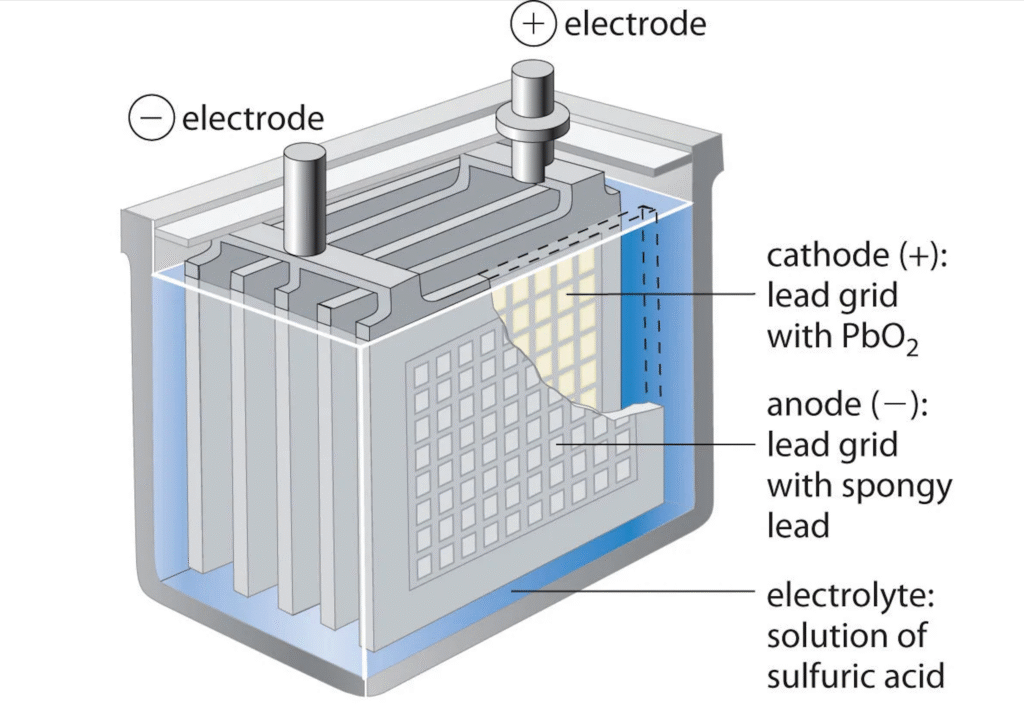
The internal structure of a lead acid battery plays a critical role in its performance, lifespan, and reliability. Different designs—such as AGM, Gel, OPzV, and OPzS—are all based on variations of the same fundamental structure.
Main Components
1. Positive Plate
- Made of lead dioxide
- Responsible for energy generation
2. Negative Plate
- Made of sponge lead
- Supports chemical reactions
3. Electrolyte
- Sulfuric acid solution
- Enables ion movement
4. Separator
- Prevents short circuit
- Allows ion flow
5. Battery Container
- Protects internal components
- Prevents leakage
Plate Design Types
Flat Plate
- Lower cost
- Shorter lifespan
Tubular Plate
- Longer lifespan
- Better deep cycle performance
Electrolyte Types
Liquid Electrolyte (Flooded)
- Requires maintenance
Gel Electrolyte
- Maintenance-free
- Better deep cycle
AGM Structure
- Absorbed electrolyte
- Better high-current performance
How Structure Affects Performance
| Factor | Impact |
|---|---|
| Plate thickness | Cycle life |
| Electrolyte type | Maintenance |
| Separator quality | Safety |
Advanced Designs
Modern batteries include:
- Lead carbon technology
- Improved grid structure
- Enhanced separators
Conclusion
The structure of a lead acid battery directly determines its:
- Performance
- Lifespan
- Application suitability
👉 Choosing the right design is essential for energy storage systems.
FAQ
Q1: What is the most durable structure?
Tubular plate design.
Q2: Which is maintenance-free?
Gel and AGM batteries.