
Meta Description
Learn why sulfation occurs in lead acid batteries, how it damages performance, and how to prevent it.
Keywords
battery sulfation, lead acid battery sulfation, sulfated battery, battery failure causes
Introduction
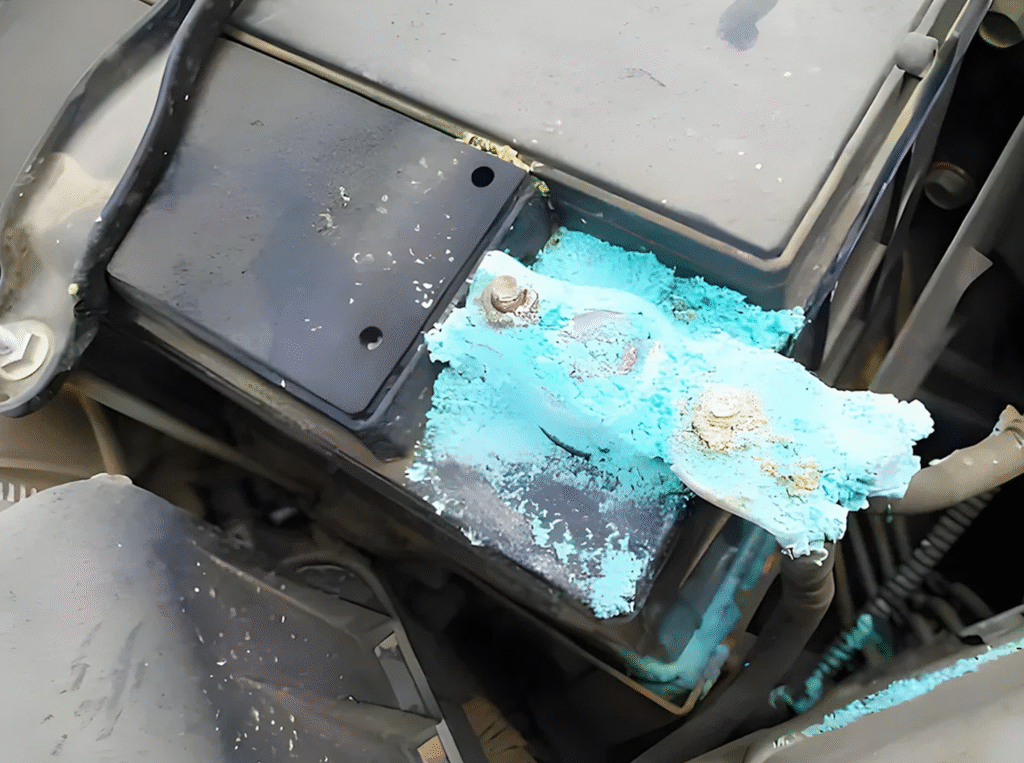
Sulfation is one of the most common causes of lead acid battery failure.
Many batteries lose capacity or fail prematurely because of sulfation caused by:
- Improper charging
- Long-term storage
- Deep discharge
Understanding sulfation is essential for extending battery lifespan.
What Is Sulfation?
During normal discharge:
- Lead sulfate forms on battery plates
During charging:
- Lead sulfate converts back into active material
However, when batteries remain undercharged for long periods:
- Lead sulfate crystals harden
- Crystals become difficult to reverse
This process is called sulfation.
Main Causes of Sulfation
1. Undercharging
If batteries are not fully charged regularly:
- Sulfate crystals accumulate
2. Long-Term Storage
Stored batteries self-discharge over time.
Without maintenance charging:
- Sulfation develops
3. Deep Discharge
Repeated excessive discharge accelerates sulfation.
4. Low Charging Voltage
Incorrect charger settings can prevent full charging.
Effects of Sulfation
Reduced Capacity
Battery stores less energy.
Increased Internal Resistance
Performance decreases.
Shortened Lifespan
Severe sulfation can permanently damage batteries.
Signs of Sulfation
- Battery charges quickly
- Capacity drops rapidly
- Voltage unstable
- Poor runtime
How to Prevent Sulfation
- Maintain proper charging
- Avoid deep discharge
- Use temperature compensation
- Perform regular maintenance charging
Can Sulfation Be Reversed?
Mild sulfation may be partially reversible through:
- Equalization charging
- Desulfation chargers
Severe sulfation is usually permanent.
Conclusion
Sulfation is a major cause of lead acid battery failure, but proper charging and maintenance can significantly reduce the risk.
Preventing sulfation is one of the best ways to extend battery lifespan and improve system reliability.
FAQ
Q1: Is sulfation normal?
Yes, but excessive sulfation is harmful.
Q2: Can a sulfated battery recover?
Partially, if damage is not severe.
Q3: How do I prevent sulfation?
Keep batteries properly charged.